Friday, October 30, 2026

Denmark in 2025 €132 billion and Ireland 2025 €38.86 billion: Irish shipments to the United Staes were a very poor level of about €5.5 billion annually


Copenhagen

Denmark 2025 

Denmark’s international export sector achieved exceptional milestones, with total annual exports climbing to a record high of $148.1 billion USD.(€132.16 billion).
Native Danish corporations capitalised heavily on foreign demand, resulting in an overall global trade surplus of approximately $12.6 billion USD.
The primary engine of this growth has been the pharmaceutical sector, particularly driven by massive foreign production and global sales from Danish-owned affiliates. However, a major macro trend is a shift toward a more diversified export portfolio, with non-pharmaceutical manufacturing, clean tech, and global shipping playing key foundational roles.
Top Danish Entities Driving Overseas Sales
Danish trade is highly consolidated, with the ten largest native enterprise groups representing nearly half of all direct investments and corporate footprints abroad.
The undisputed heavyweight of the Danish economy. Its blockbuster diabetes and weight-loss treatments propelled pharmaceutical exports to $24.75 billion USD, representing 16.5% of Denmark's total trade.

A global leader in ocean logistics. Maritime shipping stands as Denmark's largest individual service export sector, accounting for roughly 24% of the country's total export industry value.

Spearheading Denmark's green technology outreach. Vestas anchored Denmark's $19.03 billion industrial machinery export sector and ranked 3rd globally on the Corporate Knights sustainability index.

The dominant force in Denmark's high-value agricultural export trade. Arla continues to lead massive overseas dairy shipments (specifically cheese and specialised milk powders) to regional and global markets.

A key multinational transport and logistics provider that facilitates supply chain routing and global transport networks for both Danish and international corporations. 

Friday, October 16, 2026

Apartheid Regime: Israel not a functioning Democracy according to B'Tselem- More than 130,000 Palestinian demolitions since 1948

The Ottoman Empire lasted almost 600 years, from the early 1300s until the aftermath of the First World War. The word Ottoman derives from the Arabic version of Osman – the name of its first ruler 

The Byzantine Empire, also known as the Eastern Roman Empire, continued the eastern part of the Roman Empire, centred on Constantinople, during late antiquity and the Middle Ages. 

After surviving the fall of the Western Roman Empire in the 5th century AD, it endured until the Ottoman Empire conquered Constantinople in 1453. 

The term 'Byzantine Empire' was coined only after its demise; its citizens used the term 'Roman Empire' and called themselves 'Romans'

The term "Sick Man of Europe" originally referred to the Ottoman Empire in the mid-19th century, a moniker commonly attributed to Tsar Nicholas I of Russia.
In the 1880s, this crisis deepened due to severe financial collapse, territorial losses in the Balkans, and rising European imperialism.

Monday, October 05, 2026

Pax Europaea: The longest period of continuous peace in Western Europe since the fall of the Western Roman Empire in 476 AD


In 1958, Jean-Baptiste Nicolas Robert Schuman became the first President 

of the European Parliamentary Assembly (later the European Parliament) 

In 1950, the Schuman Declaration proposed a joint coal and steel authority between France and West Germany, helping avert future conflict and leading to the European Coal and Steel Community (ECSC). 

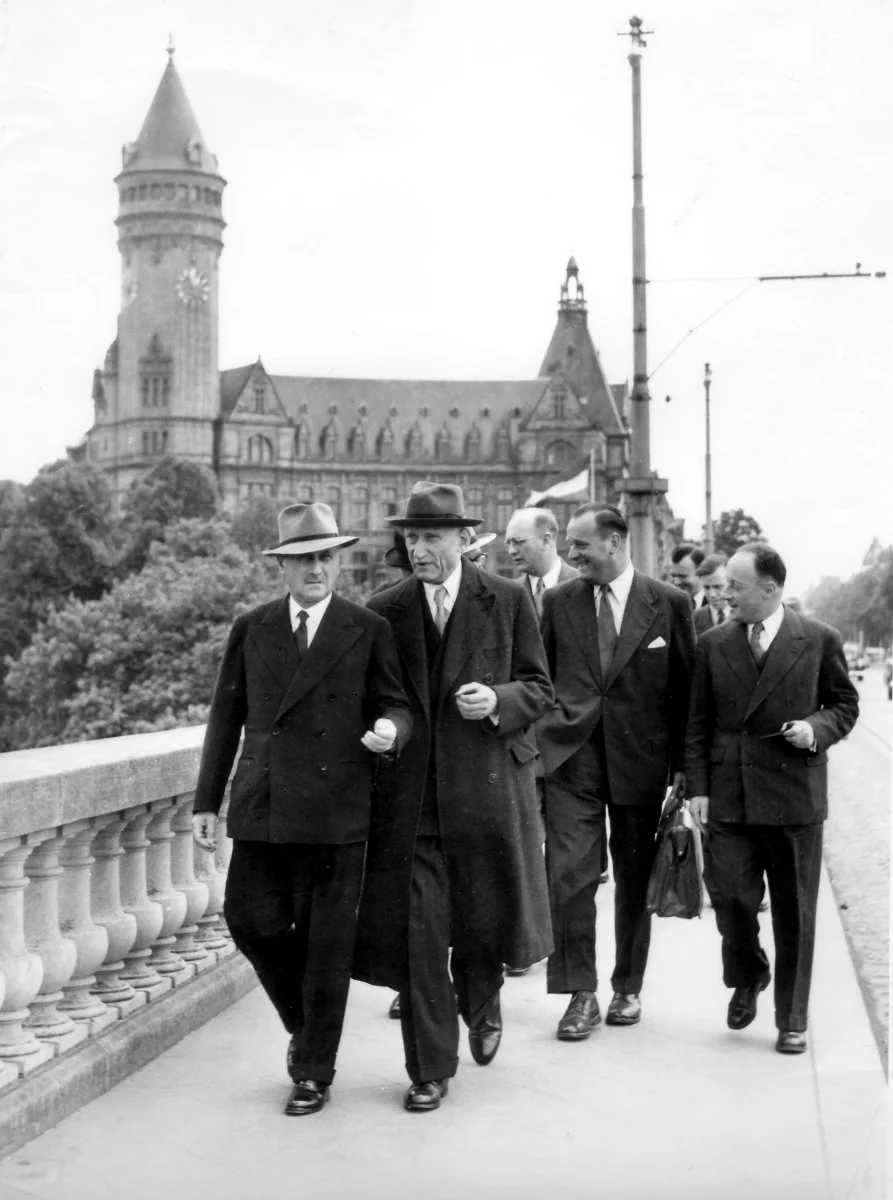
Schuman, the French Foreign Minister, with his colleague Jean Monnet, a member of the French government, made history. 


From left to right, Jean Monnet and Robert Schuman in Luxembourg, 1953

The Six Founding Countries
  • France
  • West Germany (Federal Republic of Germany)
  • Italy
  • The Netherlands
  • Belgium
  • Luxembourg
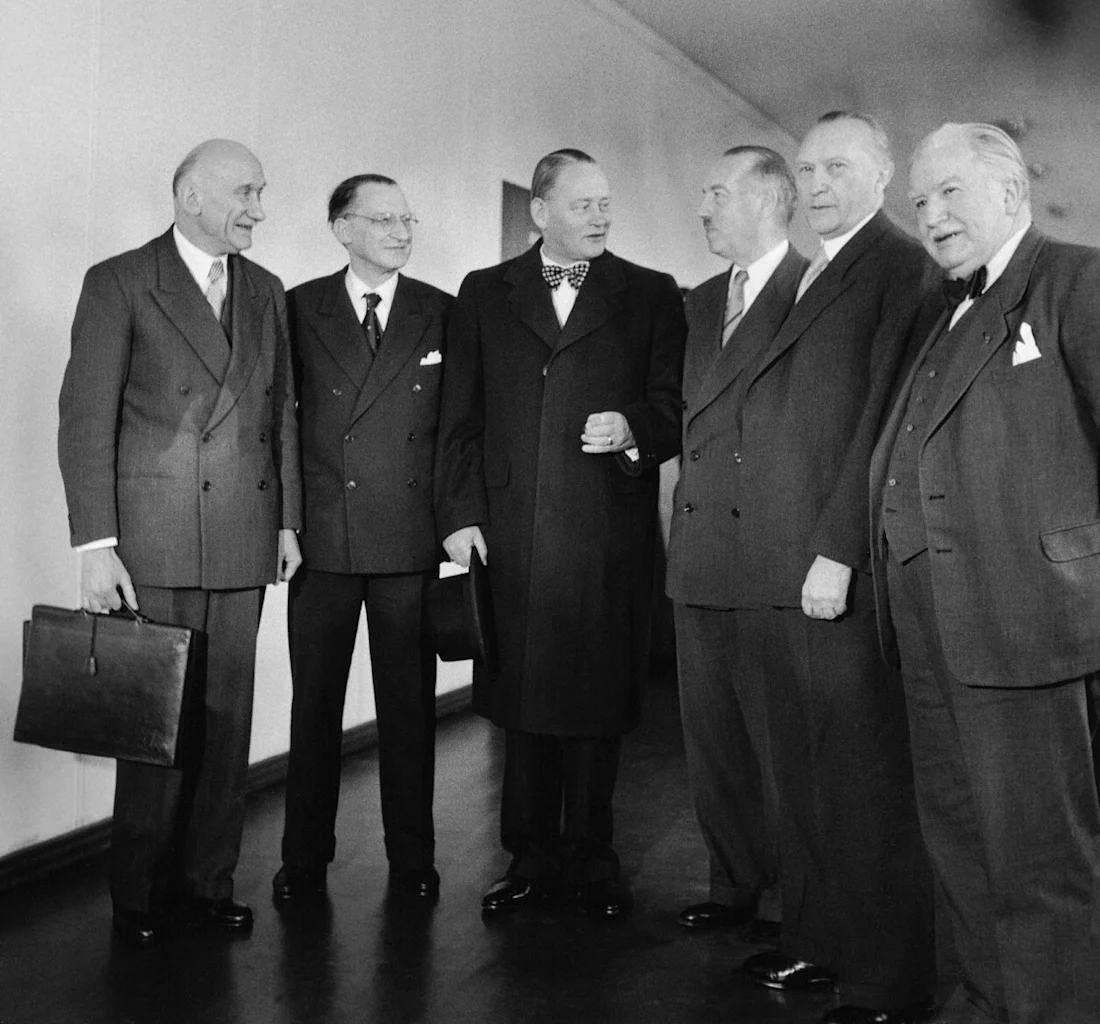
  • France: Robert Schuman (Foreign Minister who proposed the plan) and Jean Monnet (political-economic adviser and architect of the plan).
  • West Germany: Konrad Adenauer (first Chancellor of West Germany).
  • Italy: Alcide De Gasperi (Prime Minister and Foreign Minister).
  • Belgium: Paul-Henri Spaak (Prime Minister and prominent diplomat).
  • The Netherlands: Johan Willem Beyen (Foreign Minister) and Sicco Mansholt (agricultural policy planner).
  • Luxembourg: Joseph Bech (Prime Minister and Foreign Minister).